Sleep setup guide
How Adjustable Beds Affect Mattress Compatibility and Sleep Setup
An adjustable bed can turn a familiar mattress into a more flexible sleep surface, lifting the head, the feet, or both. But the pairing works best when the mattress can bend with the base, the frame is properly supported, and the rest of the bedroom is ready for movement.
A practical, product-neutral guide to adjustable beds, mattress compatibility, and a comfortable bedroom setup.
At first glance, an adjustable bed seems simple: press a button, raise the head, and settle in. In reality, the base changes the shape of the entire sleep surface. The mattress has to follow that motion without buckling, sliding, or losing the support it provides when flat. Pillows, bedding, bedside furniture, and even the path to the outlet can matter, too.
That doesn’t mean an adjustable bed requires a complicated bedroom overhaul. It does mean that compatibility deserves a closer look before a new base arrives or a mattress is moved onto one. A suitable mattress should flex in a controlled way, remain stable through position changes, and work within the limits set by the base manufacturer. The goal is not to find a universal “best” combination, but to create a sleep setup that moves smoothly and feels comfortable for the people using it.
Below, we explain what happens when a base elevates, which mattress characteristics matter most, and how to think through pillows, bedding, room layout, and everyday use. Whether you’re planning a first adjustable-bed setup or checking whether an existing mattress can make the transition, a few careful checks can help avoid surprises.
What an adjustable bed changes
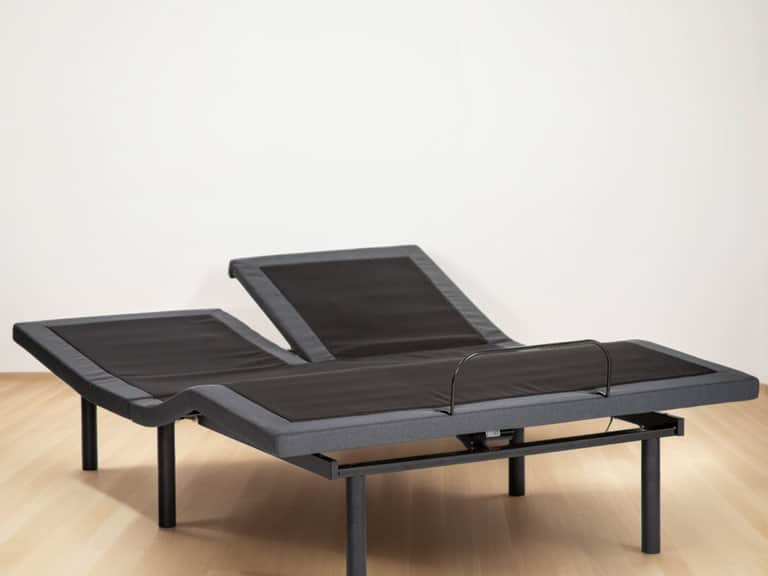
A traditional bed keeps the mattress in one flat position. An adjustable base introduces hinges and articulated sections that raise or lower parts of the sleeping surface. Many models let the head and foot move independently; others offer preset positions or a split design that allows each side of a larger bed to adjust separately.
As the base moves, the mattress bends at particular points. The head section may lift the shoulders and upper body, while a raised foot section can elevate the lower legs. A position that feels pleasant while reading or watching television may be different from the one that feels comfortable for sleep. Changing the angle also changes how the body meets the mattress and how gravity acts on the bedding.
This movement can make an adjustable bed useful for people who like to vary their position while resting. It may also make activities such as getting in or out of bed feel different, depending on the height and angle selected. An adjustable base is not a treatment for a health condition, however, and it should not be treated as a substitute for medical advice. Anyone considering elevation for a specific health concern should discuss that choice with a qualified clinician.
The mechanical change is straightforward, but it has practical consequences: a mattress that resists bending may not follow the base’s shape neatly, while a flexible mattress may move with it more naturally. The base and mattress therefore need to be considered as a pair.
Start with the base manufacturer’s guidance
Before judging a mattress by its label or feel, check the adjustable base’s owner manual or ask the manufacturer about compatibility. The base maker can specify limits for mattress dimensions, weight, thickness, construction, and use. Those requirements are the most important starting point because bases differ in their mechanisms and intended operating conditions.
Look for guidance on whether the base is designed for a particular mattress size, whether it supports a split configuration, and whether a separate frame or foundation is allowed. Some bases are intended to sit directly on the floor or inside a compatible frame; others have adjustable legs or can be used with specific platform or pedestal arrangements. Do not assume that a frame that accommodates a standard mattress will automatically accommodate a moving base.
Check the mattress warranty and care information as well. A mattress may be advertised as compatible with an adjustable base, but the fine print may set conditions about the type of base, slat spacing, or support beneath it. If the documentation is unclear, get written clarification before setting up the bed. This can help protect both the equipment and the mattress from being used in a way the maker does not recommend.
Mattress flexibility and construction
Flexibility is central to adjustable-bed compatibility. When the base bends, the mattress needs to follow without forming a sharp fold or lifting away from the platform. How readily it does that depends on its materials, internal structure, and overall design—not simply on whether it is described as soft, firm, luxury, or premium.
Foam and latex mattresses are often capable of bending with an adjustable base, but construction varies widely. A thick comfort layer, a firm core, reinforced sides, or a specific internal design can change how a mattress responds to movement. Innerspring mattresses also vary: some are engineered to flex, while other coil systems or connected constructions may be less suited to repeated articulation. A product’s materials alone cannot confirm compatibility.
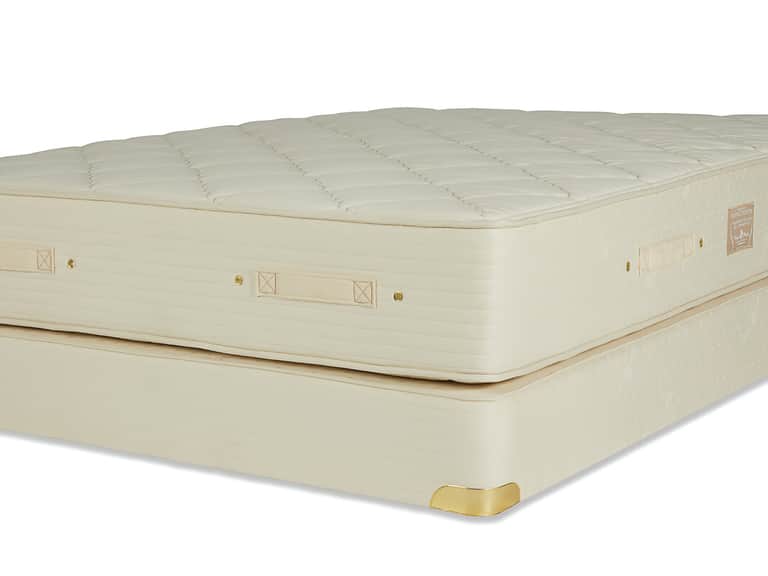
For a useful example, the [Royal-Pedic Natural Latex Quilt-top Mattress with German Stretch Knit ticking](/products/royal-pedic-natural-latex-quilt-top-mattress-with-german-stretch-knit-ticking-605) is described as suitable for use on an adjustable bed base. Its listed construction includes an approximately eight-inch natural latex core, with cotton fabric and wool in the surrounding layers. That specific compatibility statement is more useful than making assumptions about all latex mattresses. Always check the details for the exact mattress model you own or are considering.
When a mattress is compatible, the surface should generally follow the base’s changing contours rather than resisting them. If a mattress stays rigid while the platform bends, it may not sit as intended. If it shifts or bunches, the fit or retention system may need attention. Stop using the base if you notice unusual strain, mechanical noise, or movement that appears unsafe, and consult the relevant manufacturer.
Thickness, weight, and fit
Mattress thickness is worth checking because it can affect how the mattress bends and how well it stays in place. A very thick mattress may behave differently from a thinner one on the same base. That does not mean thick mattresses are automatically incompatible; it means the base’s specifications should be consulted instead of relying on a general rule.
Weight matters for a different reason. The base must be able to support the mattress and the people using it, while moving through its intended range. A heavy mattress may be harder to reposition during setup and could exceed a stated limit when combined with sleepers. Find the maximum load information in the base documentation and include the mattress, bedding, and occupants in the calculation if the manufacturer defines capacity that way.
Dimensions should match precisely. A mattress that is too narrow or too long can interfere with the platform’s movement or sit unevenly. The names of sizes can also conceal differences: a split king, split-head king, and standard king may not have the same arrangement. If a couple wants independent adjustment, confirm whether the base and mattress are built for that configuration, including the center gap and any shared bedding considerations.
Keep the mattress stable as the bed moves
During elevation, gravity can encourage the mattress and bedding to slide toward the lower end of the base. Many adjustable bases use retaining bars or another method to help keep the mattress in position. Check that these components are installed and used according to the instructions. A mattress that repeatedly shifts can become uncomfortable and may make it harder to keep sheets neatly fitted.
Before using the bed, inspect the mattress placement with the base flat. Make sure it is centered and aligned with the platform, then run the base through its movement slowly while watching for slipping, pinching, or contact with nearby furniture. Keep hands, cords, and loose objects clear of moving joints. Never reach beneath a base while it is operating, and follow the manufacturer’s safety advice when cleaning or adjusting the mechanism.
Fitted sheets may need more room to accommodate a raised position. Deep-pocket sheets can sometimes help with thicker mattresses, but pocket depth alone does not guarantee a good fit; elastic quality and the mattress’s dimensions matter too. Securely fitted bedding should remain comfortable and should not be so tight that it pulls against the mattress as the base bends.
Finding a comfortable position
There is no single angle that suits everyone. Some sleepers prefer a modest head lift, while others like a more noticeable incline for reading or winding down. A raised-leg position may feel comfortable to one person and awkward to another. The best approach is gradual experimentation: begin with a small adjustment, notice how the body feels, and make changes slowly.
Try different positions while awake before settling in for the night. Pay attention to pressure around the hips and shoulders, whether the lower back feels supported, and whether the neck remains relaxed. If a position creates discomfort, flatten the bed or adjust it rather than assuming the body simply needs to get used to it. An adjustable base changes the angle of the sleep surface; it does not guarantee that a particular posture will be right for every sleeper.
Some bases include preset settings, such as a flat position or a customized memory option. Those features can make it easier to return to a preferred arrangement, but a preset is a convenience rather than a recommendation for everyone. Test any saved position while awake, and make sure the remote is easy to reach without creating a nighttime safety concern.
Rethink pillow support
When the head end rises, the relationship between the head, neck, and mattress changes. A pillow that feels comfortable on a flat bed may push the chin forward or leave the neck unsupported when the upper body is elevated. Try adjusting the pillow arrangement after changing the base position. The aim is to keep the head and neck comfortable without forcing them into a sharply bent posture.
Some sleepers find a single pillow sufficient in a raised position; others prefer a different loft or a smaller support pillow. Rather than piling up cushions automatically, test one change at a time. The right setup depends on the pillow’s shape and fill, the mattress’s give, the amount of elevation, and the sleeper’s body and preferences.
A backrest pillow can be useful for sitting upright to read or work, but it serves a different purpose from a pillow selected for overnight sleep. If you use one, keep the distinction in mind: a supportive lounging arrangement does not necessarily translate into an ideal sleeping posture. Remove or reposition extra cushions before sleep if they create pressure or instability.
Bedding and temperature comfort
Sheets, blankets, and mattress protectors should move with the mattress without pulling tight across hinges or bunching beneath the body. Lightweight layers are often easier to manage than an oversized, heavy stack. If bedding slides when the base rises, check the sheet fit and the mattress’s position before adding more tucks or weights. Avoid placing objects on the bed to hold covers down, especially near moving sections.
Adjusting the bed can also change how blankets drape and where warmth collects. A comforter may fall differently when the head or foot is raised, and a tightly tucked cover may restrict movement. Try the setup with your regular sleep layers and make sure you can move naturally beneath them. Breathable fabrics and a comfortable room temperature remain relevant whether the bed is flat or elevated.
A mattress protector should fit the mattress securely and be appropriate for its dimensions. Check its care instructions, too: repeated washing or high-heat drying can affect some fabrics and elastic. The protector should not bunch up or interfere with the base’s motion. If it does, reassess the fit rather than pulling it tight across the mattress.
Plan the bedroom around movement
An adjustable base needs room to operate. Leave enough clearance around the bed for the platform and any frame components to move without striking a nightstand, wall, or storage container. Keep cords away from hinges and moving parts, and position the remote somewhere accessible but secure. If the base has under-bed lighting or USB ports, route cables so they cannot snag as the bed changes position.
Think about the bed’s height in both its flat and raised configurations. A setup that feels easy to enter when flat may feel different when the mattress is elevated. Consider whether bedside tables remain reachable and whether a lamp, phone charger, or glass of water is still safely accessible. Avoid balancing breakable items on a surface that could be bumped during movement.
Before assembly, measure the room and review the base dimensions, including its legs and any clearance requirements. If the bed will sit inside a frame, confirm that the frame is specifically compatible. Product specifications for some adjustable bases describe features such as independent head and foot movement, preset positions, adjustable leg heights, and platform or pedestal compatibility. Those details can help with planning, but the manufacturer’s instructions for the exact model should guide the final installation.
What to know about split configurations
A split adjustable setup can give two sleepers separate control over their side of the bed. It can be appealing when partners have different comfort preferences or schedules, but it changes the bedding and room-planning conversation. Confirm the exact size and layout: some configurations split the entire mattress, while others divide only the head section.
Separate movement may create a visible or felt gap in the center, depending on the arrangement. Shared sheets may behave differently from two individual fitted sheets, and a shared comforter can shift as each side moves. Before choosing a configuration, consider how independently each sleeper wants to adjust and whether both people are comfortable with the bedding arrangement.
Check remote pairing, power connections, and instructions for each side. If one side is moving while the other remains flat, make sure both sleepers have clear access to their controls and that cords are secured. A split design can offer flexibility, but it also makes accurate measuring and model-specific compatibility particularly important.
A simple compatibility checklist
Before placing a mattress on an adjustable base, work through the basics. This quick review cannot replace the owner manuals, but it can help you spot questions that deserve an answer before setup:
- Confirm approval: Check that the mattress and base manufacturers permit the combination.
- Verify size: Match the mattress dimensions to the base, including any split configuration.
- Check capacity: Review the base’s weight limits and how the manufacturer defines them.
- Review construction: Look for model-specific guidance about flexibility, thickness, and support.
- Install retention parts: Use the supplied mattress retainer or other components as directed.
- Clear the area: Keep furniture, cords, and objects out of the base’s movement path.
- Test slowly: Observe the mattress and bedding through a full range of motion before regular use.
- Reassess comfort: Adjust pillows and covers after changing the bed’s position.
Common setup mistakes to avoid
One common mistake is assuming that a mattress will work because it fits the base’s dimensions. A snug fit is only one part of compatibility; the mattress also needs to bend as intended and stay within the base’s stated limits. Another is relying on a general rule about material. Two mattresses with the same broad fill category can have very different constructions.
It is also easy to overlook the frame underneath the base. A heavy base placed on an unsuitable support may be unstable, even if the mattress itself is compatible. Similarly, a mattress that seems secure while flat can shift once the head or foot rises. Test the whole setup, not just the individual components.
Finally, avoid treating the most elevated position as the default for every activity. A dramatic angle may feel useful for a short period but uncomfortable for long stretches. Begin with small adjustments, keep controls close, and return the bed to a position that feels stable and comfortable. If the base behaves unexpectedly, stop and consult the manufacturer rather than trying to force the mechanism.
The bottom line
An adjustable bed can make a sleep setup more adaptable, but its success depends on thoughtful pairing. Mattress flexibility, thickness, weight, and dimensions all deserve attention, as do the base maker’s instructions and the design of the surrounding frame. Once the mechanics are sorted, pillows, bedding, room clearance, and familiar nighttime routines help make the setup feel natural.
Take measurements, read the manuals, and test changes gradually. A well-planned adjustable bed should move smoothly, keep the mattress stable, and offer positions that feel comfortable to the person using it. The best setup is not the one with the most dramatic elevation or the longest list of features; it is the one that fits the room, follows the equipment’s requirements, and supports restful routines night after night.
A note on health and sleep concerns
This guide covers general bedroom setup and equipment considerations, not diagnosis or treatment. If sleep disruption, pain, breathing difficulties, or another health concern is affecting you, seek advice from a qualified healthcare professional. Follow the instructions supplied with your adjustable base and mattress, and contact their manufacturers when compatibility or safe operation is uncertain.