Sleep, materials & support
Inside the Vispring Baronet Superb: Materials, Support, and Sleep Feel
A mattress is more than a surface to stretch out on. Its springs, upholstery and cover work together to shape how it supports the body, responds to movement and feels through the night. The Vispring Baronet Superb offers a useful lens for understanding that relationship—provided you check the current specifications for the exact model and configuration you are considering.
The name may suggest a finished promise of comfort, but a mattress cannot tell you whether it will suit your body simply by being described as luxurious, supportive or traditionally made. Those words are starting points, not a personal sleep test. To evaluate a pocket spring mattress such as the Baronet Superb, it helps to look beneath the surface: What spring system is specified? What natural mattress fillings are used? How does the complete construction respond when you lie down, shift position or share the bed?
Those details can explain a mattress’s character, but they do not produce a universal verdict. Sleep comfort depends on body shape, preferred position, temperature, bedding and the foundation underneath. A thoughtful assessment therefore balances construction information with the practical question that matters most: does the bed feel comfortable and supportive over time?
Why look at the mattress as a system?
It is tempting to focus on one impressive-sounding feature, such as a spring count or a natural fiber. In reality, a mattress is a layered system. The core provides much of the structural support, upholstery layers change how that support is felt at the surface, and the cover contributes to the initial touch and breathability. A foundation can influence how evenly the mattress is supported, while sheets and blankets affect the sleep environment around it.
That is why “support” and “firmness” should not be treated as synonyms. Firmness describes the first impression of the surface—softer, more yielding, or more resistant. Support describes how well the overall sleep surface accommodates the body without leaving areas inadequately supported. A mattress can feel plush at the top while still feeling stable underneath, or it can feel firm without working well for a particular sleeper.
For the Vispring Baronet Superb, the most responsible starting point is the current product specification for the precise size and version available in your region. Construction, options and descriptions can change. Confirm the materials, spring configuration, upholstery, dimensions, delivery details and care instructions directly with current manufacturer or retailer information rather than relying on an old listing or a general description of the range.
Pocket springs: individual movement, shared support
A pocket spring mattress uses coils housed in individual fabric pockets. Because the springs are not necessarily joined together as one continuous unit, they can respond more independently to pressure. In broad terms, that design may allow different parts of the sleep surface to react to different body areas, rather than moving as a single sheet of springs.
That description is useful, but it is not a guarantee of a particular feel. Spring behavior depends on details such as coil design, count, gauge, arrangement and the layers above and below the spring unit. The finished mattress also has to be considered as a whole. Two pocket spring models can feel quite different even if both use individually wrapped coils.
For couples, independent spring movement is often discussed in relation to motion transfer. The idea is that movement in one area may be less noticeable elsewhere than it would be on some interconnected systems. Actual results vary: mattress construction, the sleeper’s movement, the bed frame and the sensitivity of the person sharing the bed can all matter. If motion disturbance is a concern, test the mattress with another person when possible and consider how you actually sleep together.
Edge support deserves separate attention. A mattress may feel stable near the middle but less secure at the perimeter, or it may provide a more consistent sitting and sleeping area. Do not assume that the spring system alone determines edge performance; the full build matters. When testing, lie near the edge and sit down as you normally would, while remembering that a brief showroom impression is not the same as months of use.
Natural fillings and the feel of the surface
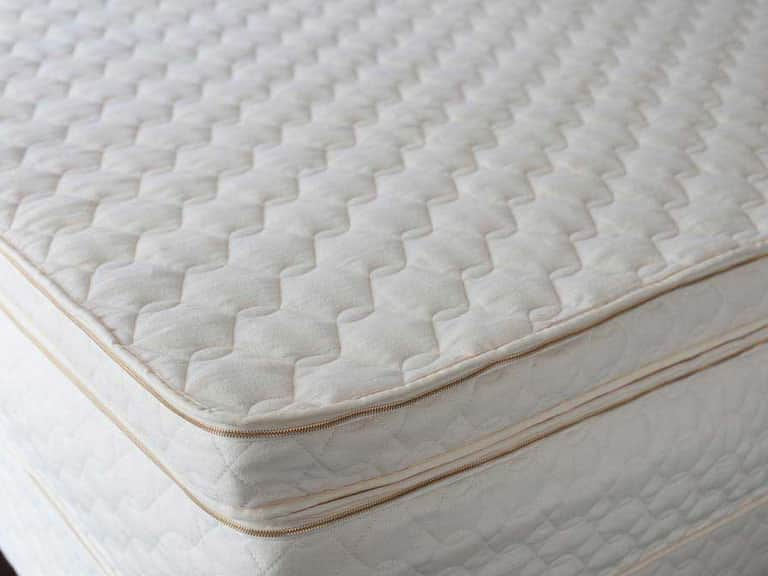
Natural mattress fillings can refer to fibers such as wool, cotton or other plant- and animal-derived materials, depending on the specific model. They may be used in upholstery layers to alter cushioning, resilience, moisture handling or the way the surface feels. But the phrase “natural fillings” is broad. It does not tell you which fibers are present, how much is used, where it sits in the mattress or how the layers are combined.
That is why a materials list is more helpful than a general label. Check the current specification for each named material and its position in the construction. If a fiber is important to you because of allergies, sourcing preferences, temperature comfort or care needs, ask for clear documentation. Also check whether a description distinguishes the mattress’s internal upholstery from its outer fabric and any optional topper or protector.
Fillings contribute to the way a mattress feels, but they should not be viewed as a simple ranking system in which one fiber is automatically best. Comfort is an interaction between the materials, the body and the room. Some sleepers like a surface that feels more cushioned; others prefer a more direct, responsive sensation. A mattress that feels pleasantly soft for one person may feel too yielding to someone else.
Natural materials are not a substitute for good care, either. Follow the specific care instructions for the mattress, rotate it only as directed, use a suitable protective layer if recommended, and keep it dry and well ventilated. Avoid assuming that an entire mattress can be washed or treated like a removable fabric cover. Its interior construction typically requires different care from ordinary sheets and pillowcases.
How sleeping position changes the equation
Your usual position offers a practical way to begin evaluating mattress support. It is not a strict rulebook: many people change positions during the night, and comfort needs vary. Still, noticing where pressure tends to build can help you describe what you need from the surface.
- Side sleeping: Pay attention to whether the shoulder and hip feel comfortably cushioned while the middle of the body remains supported. Excessive pressure or a sense of sinking unevenly may be a sign that the surface is not working for you.
- Back sleeping: Notice whether the body feels evenly supported and whether the lower back feels comfortable. A firm first impression alone does not establish that the mattress suits your body.
- Stomach sleeping: Consider whether the hips feel overly low or whether the surface creates an uncomfortable bend. Individual needs differ, so use your own sustained comfort rather than a generic firmness label as the guide.
- Combination sleeping: If you move between positions, assess how easily you can turn and whether the mattress feels comfortable in more than one posture.
These are observations, not medical diagnoses. Persistent pain, numbness or other health concerns deserve advice from an appropriate health professional. A mattress can influence comfort, but it should not be presented as a treatment for a medical condition.
What the Baronet Superb might feel like—and what cannot be assumed
The Baronet Superb is best approached as a particular mattress whose experience depends on its confirmed construction and your own preferences—not as a promise that every sleeper will experience the same “sleep feel.” Pocket springs and upholstery materials can provide clues about responsiveness and surface character, but a product name alone cannot establish firmness, pressure relief, temperature or motion isolation for every body.
Descriptions such as soft, medium or firm are also not perfectly standardized across manufacturers. Even when a firmness label is published, it may be more useful as a general comparison within one brand than as a universal measurement. If available, test the exact configuration you intend to buy. Spend enough time in your usual sleep positions to notice pressure, alignment and how easily you move, rather than judging only by sitting on the edge.
For an at-home trial or return period, read the terms before purchase. Confirm the length of the trial, any required break-in period, whether collection or delivery charges apply, and what condition the mattress must be in if returned. Warranty terms are different from trial terms: a warranty usually addresses defined defects, not whether you personally like the feel. Clear expectations can make a significant purchase less stressful.
The foundation beneath the mattress matters
A mattress needs a compatible, stable base. The wrong foundation may affect how the sleep surface performs and can conflict with care or warranty requirements. Before setting up the Baronet Superb, check the manufacturer’s guidance on platform bases, slatted frames, adjustable bases and support spacing. Do not assume that a base suitable for one mattress is automatically appropriate for another.
Slat spacing, center support, frame condition and the bed’s weight capacity are practical details worth checking. A frame should be level and secure, with no broken or sagging components. Good support also helps ensure that the mattress is not being asked to compensate for a weak base.
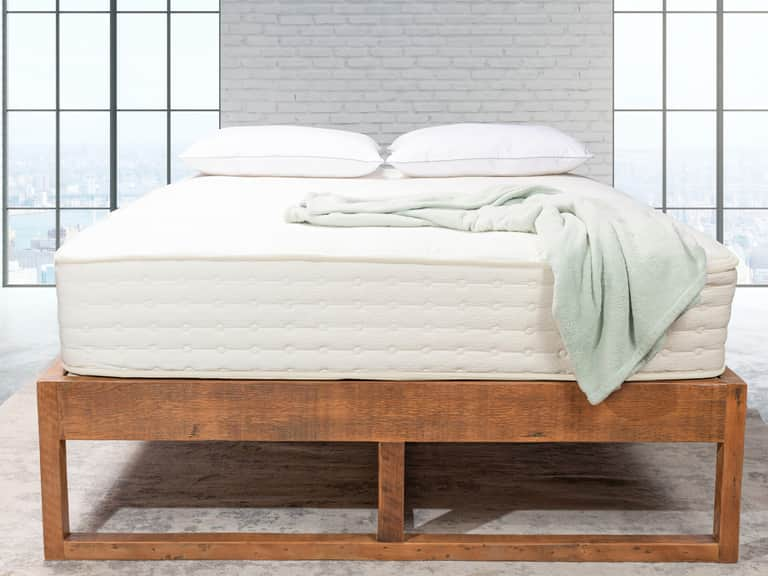
For readers comparing the whole sleep setup, a platform option such as the Taconic Bed is described as having solid wood slats spaced no more than 2.5 inches apart. That is a construction detail to compare with the mattress maker’s requirements, not a blanket statement that any particular frame is compatible with every mattress. Verify the relevant specifications before pairing a base and mattress.
Temperature, bedding and everyday comfort
People sometimes attribute a warm or cool night entirely to their mattress. In practice, the sleep environment is a team effort: room temperature, humidity, pajamas, sheets, blankets, mattress protectors and personal physiology all contribute. Upholstery and cover materials may affect how air and moisture move near the body, but no material can promise a particular temperature experience in every home.
Start with the bedding you already use. If you tend to wake warm, consider whether heavy layers, a dense protector or a warm room may be contributing. Breathable sheets and lighter seasonal covers can make the bed easier to adjust. If you tend to feel cold, adding an appropriate layer may be more useful than assuming a different mattress alone will solve the issue.
A mattress protector can help guard against spills and everyday soiling, but it adds another layer between the sleeper and the mattress. Check its care instructions and consider whether its fabric and construction suit your preferences. The Vispring Lux Skirted Mattress Protector, for example, is described as a cotton-covered, wool-filled protector with an elasticated skirt. Its product description gives specific washing guidance; always follow the current instructions for any protector you use.
A calm, practical checklist before deciding
Rather than letting a long list of features take over the decision, use a short checklist that connects construction to your actual needs:
- Confirm the current Baronet Superb specification for the exact size and configuration.
- Check the named spring system and materials, and ask for clarification where descriptions are general.
- Test in your normal sleeping positions, taking time to notice pressure, support and ease of movement.
- If sharing a bed, assess space, motion disturbance and edge comfort together where possible.
- Verify that your bed frame or foundation meets the manufacturer’s requirements.
- Review delivery, trial, return, maintenance and warranty terms before committing.
- Think about the full setup, including your pillow, protector, sheets, blankets and bedroom temperature.
Taking notes can make comparisons clearer. Instead of writing “felt nice,” record what happened when you lay on your side, whether your shoulder felt comfortable, how easy it was to turn and whether the surface felt too warm. Those observations are personal, but they are more useful than an abstract promise of luxury.
The bottom line
The Vispring Baronet Superb is a useful example of why a mattress should be understood through the relationship between springs, upholstery, surface feel and foundation. A pocket spring design can help explain how support is delivered; natural fillings may shape cushioning and the character of the surface. Neither feature, alone or together, guarantees that a mattress will suit every sleeper.
For a confident assessment, verify today’s exact materials and construction, try the mattress in the positions you use most, and check that the rest of your bed is compatible. The right choice is not simply the one with the most impressive specification. It is the one whose support and comfort make sense for your body, your habits and the sleep environment you can maintain night after night.
Frequently asked questions
What does a pocket spring mattress do?
Its coils are housed in individual pockets and may respond more independently to pressure than a connected spring unit. The complete mattress construction determines the actual feel and performance.
Are natural mattress fillings always cooler?
No single material guarantees a cooler night. Fillings can influence moisture handling and surface feel, but room conditions, bedding, covers and individual temperature preferences also matter.
How can I tell whether the Baronet Superb is right for me?
Check the current specifications and test the exact configuration if possible. Pay attention to comfort in your usual sleep positions, then confirm the foundation, trial and return arrangements.
Does a mattress firmness label tell the whole story?
No. Firmness labels offer a broad description of surface feel, but they are not fully standardized and cannot predict personal comfort. Construction and individual fit matter too.
Product specifications and care guidance can change. Confirm current details with the manufacturer or retailer before making a purchase.